
Indoor-outdoor living is not just about having a nice patio. It’s about how well your home connects to that patio, and how easy it is to move between the two. The windows and patio door replacement you choose have more to do with that experience than almost anything else.
Here is a practical look at the Renewal by Andersen Milwaukee products that best serve this goal, and what to consider when choosing between them.
Gliding Patio Doors: The Workhorse Option
Gliding patio doors are the most common patio door replacement people make, and for good reason. They slide rather than swing, so they work in spaces where a hinged door would be impractical. They create a wide opening and are easy to operate with your hands full.
Renewal by Andersen’s gliding patio doors are built with Fibrex, a composite material made from wood fiber and thermoplastic polymer. It performs better than vinyl in temperature extremes, which is relevant in Wisconsin, where summer and winter temperatures can swing wildly. It also holds paint and finish better than vinyl and doesn’t require the maintenance of real wood.
Best for: Decks, patios, and any space where you want a wide, easy opening without the swing radius of a hinged door.
Worth noting: If you have an older aluminum-frame sliding patio door, the difference between a new installation and an older one is significant. Modern glass packages dramatically reduce heat loss compared to doors made even 15 to 20 years ago.
Frenchwood Gliding Patio Doors: When Aesthetics Matter
Functionally similar to a standard gliding door, but with a traditional divided-light aesthetic that makes it look more like a French door. The grille pattern and woodgrain finish on the interior work well in homes where the clean look of a standard slider feels out of place.
This tends to be the patio door replacement choice for craftsman homes, older colonials, and cottages where the door is a visible design element rather than just a passageway.
Best for: Traditional home styles where the door needs to fit the house’s character.
Worth noting: Interior finish options let you closely match existing woodwork, which matters if you have stained trim you want the door to coordinate with.
Frenchwood Hinged Patio Doors: Maximum Opening
Hinged French doors open outward and create the widest, most unobstructed opening of any patio door option. They’re the right choice when the transition between inside and outside is meant to feel genuinely open, not just accessible.
These are popular for covered porches, four-season rooms, and larger back-of-house living areas. The full opening width makes them practical for moving furniture and hosting, not just everyday use.
Best for: Four-season rooms, covered porches, and spaces where you want the indoor and outdoor areas to function as one.
Worth noting: They require clearance for the outswing. If your patio is tight against the house, measure carefully before committing.
Picture Windows: When You Want the View Without the Draft
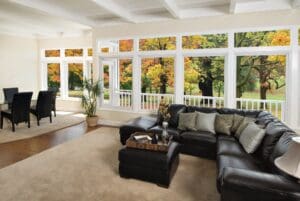
Picture windows are fixed and non-operable, which makes them the most energy-efficient window option available. No moving parts means no seals to fail and no gaps for air infiltration. In Wisconsin winters, that matters.
They’re ideal when you have a view worth framing and don’t need ventilation from that particular opening. A wide picture window overlooking a backyard, lake, or wooded lot changes how a room feels from inside the house.
They’re commonly paired with operable windows on either side, so you get both the view and the airflow when you want it.
Best for: Living rooms, dining rooms, and any space with a view worth preserving.
Worth noting: Because they don’t open, they should be paired with ventilation from an adjacent window or door if airflow matters for that room.
Casement Windows: The Ventilation Option
Casement windows crank outward on a side hinge. They’re efficient at capturing a cross-breeze because the open sash directs air into the room rather than deflecting it. They’re also among the most airtight windows when closed, thanks to the multi-point locking mechanism that draws the sash tightly against the frame.
For spaces like sunrooms, breakfast nooks, and kitchens that open toward a patio or yard, casement windows let you pull in outside air without needing to stand at the window to operate them.
Best for: Rooms where ventilation is a priority and where a crank-operated window is easier than reaching up to a sash.
Worth noting: They work best where the window isn’t obstructed by a countertop or furniture on the exterior path of the swing.
Gliding Windows: Easy Ventilation
Gliding Windows operate on a horizontal track, similar to a gliding patio door, just on a smaller scale. They’re easy to operate, work well in informal spaces, and are a natural fit for sunrooms, mudrooms, and screened porches where you want open-and-close simplicity.
They don’t have the same design range as casement or double-hung windows, but they’re practical and low-maintenance, which is often exactly what a utility space needs.
Best for: Sunrooms, mudrooms, and casual spaces where simplicity and ventilation matter more than design detail.
How to Choose
The right products depend on how your space is set up and how you use it. A few questions worth thinking through:
- Do you need a patio door replacement, or will a window serve the connection you’re looking for?
- Is the primary goal ventilation, view, or easy passage between inside and outside?
- What’s the architectural style of your home, and does the product need to match it?
- How much clearance do you have for a swinging door versus a gliding one?
Renewal by Andersen Milwaukee consultants in Wisconsin offer free in-home appointments and can walk through your specific layout. If you’ve been thinking about a patio door replacement or adding a window to connect a room to your outdoor space better, it’s worth having someone take a look and give you a concrete recommendation for your home.